

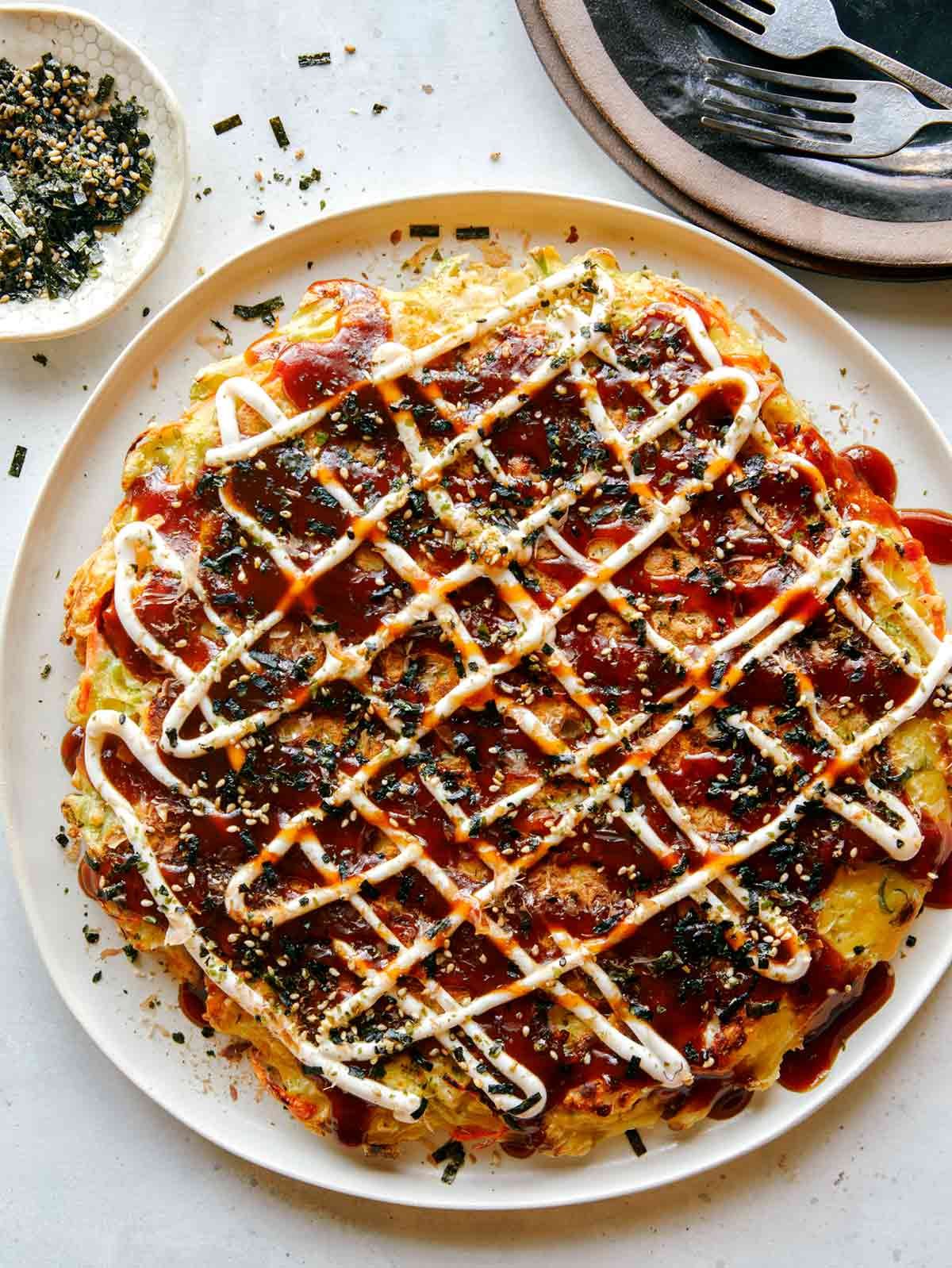

A simple and delicious recipe for Shrimp Okonomiyaki, a savory Japanese pancake. Packed with protein and vegetables, this dish can be eaten for breakfast, lunch, dinner, or even a hearty snack!
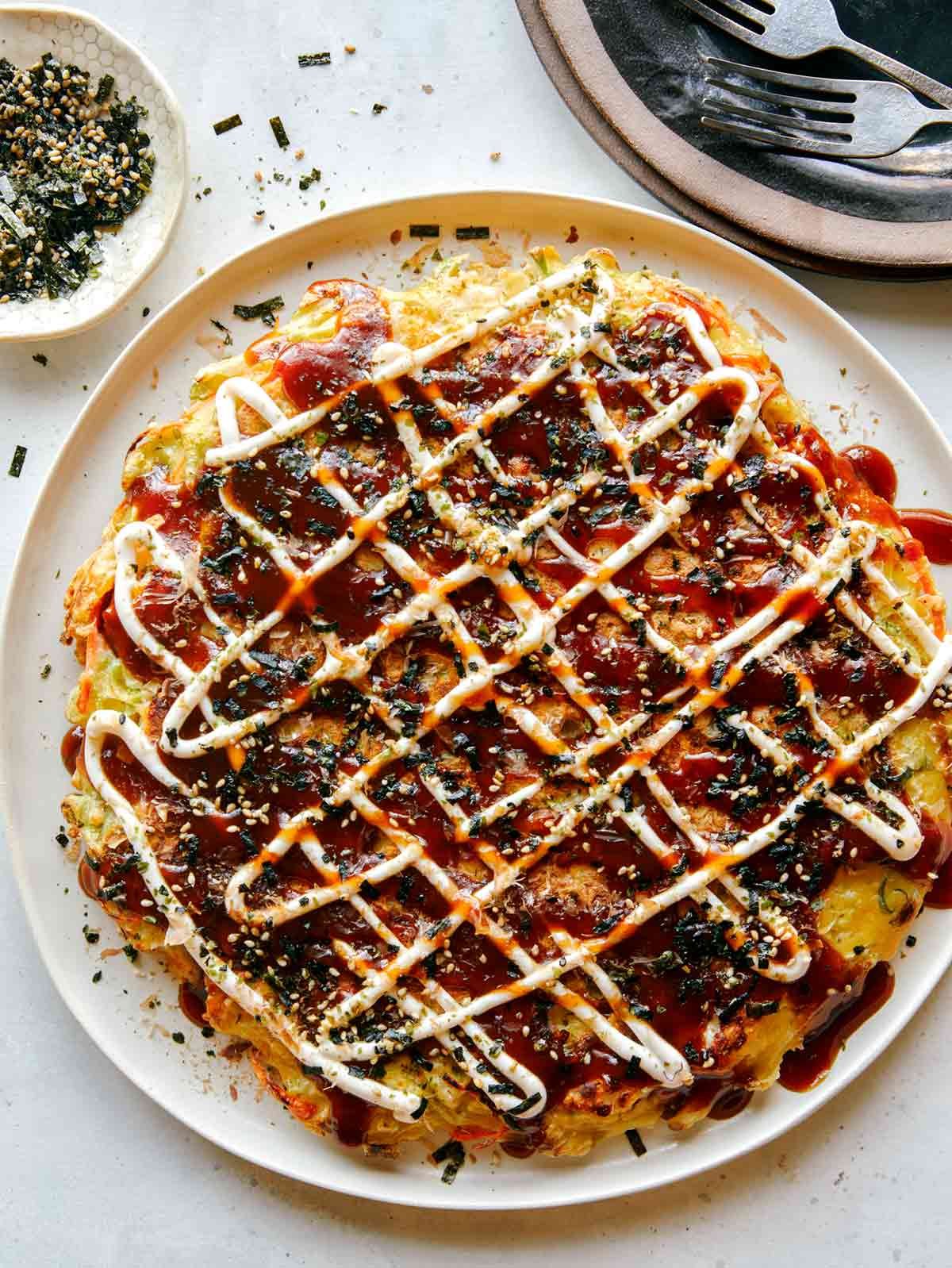
Okonomiyaki is one of our favorite quick and easy dishes to prepare! It’s a delicious and hearty dish that we could eat several times a month. It also holds and transports really well, so leftovers make a really great lunch on the go too!
If you’ve never made Okonomiyaki before, you NEED to try making it at home! It’s seriously so easy to make, slightly reminiscent of a frittata and Spanish tortilla and incredibly tasty!
What is Okonomiyaki?
Okonomiyaki is a savory Japanese pancake using a wheat-based batter with eggs. The mix-ins and toppings vary depending on the region of Japan.

How to Make Our Okonomiyaki Recipe
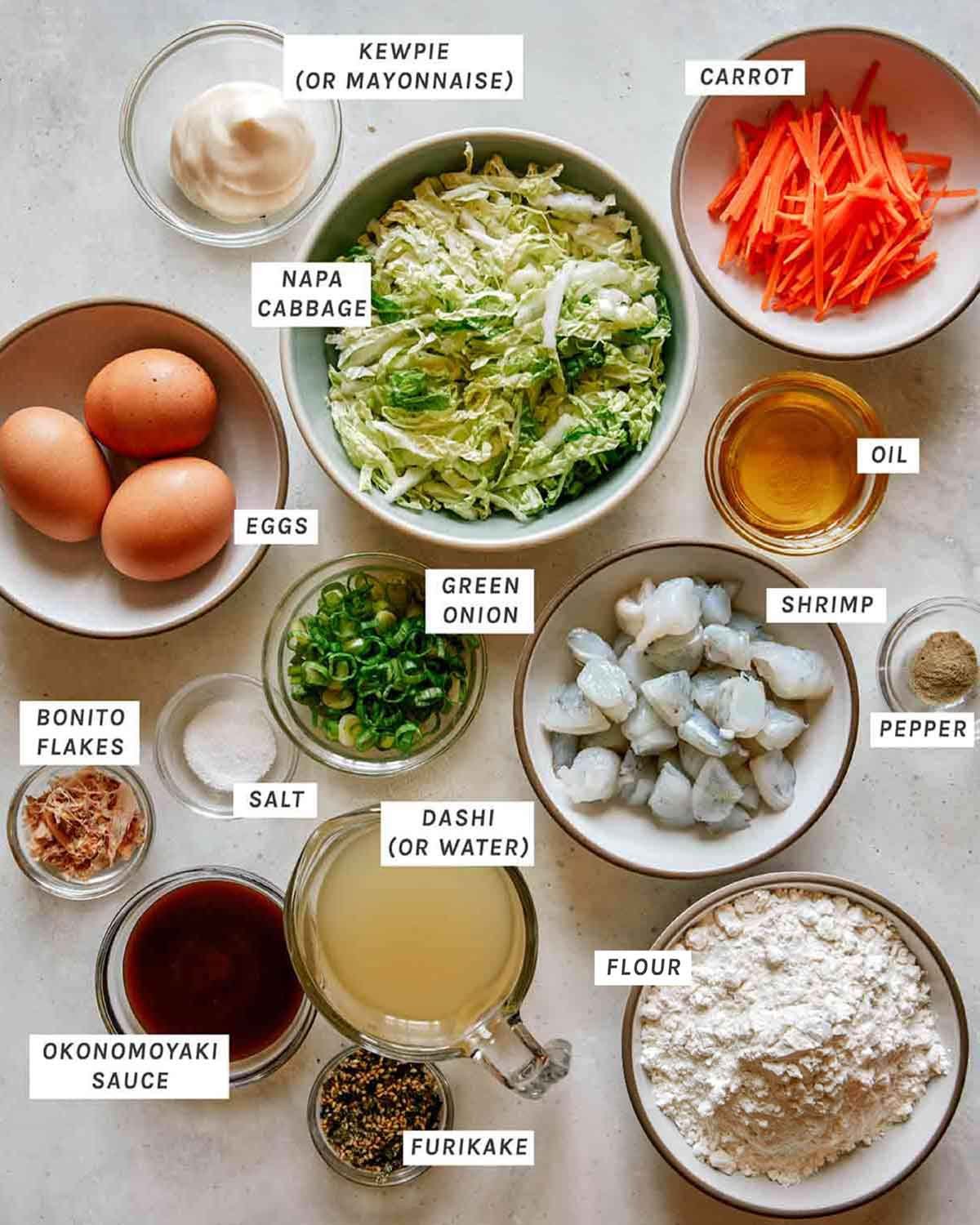
Ingredients
Process
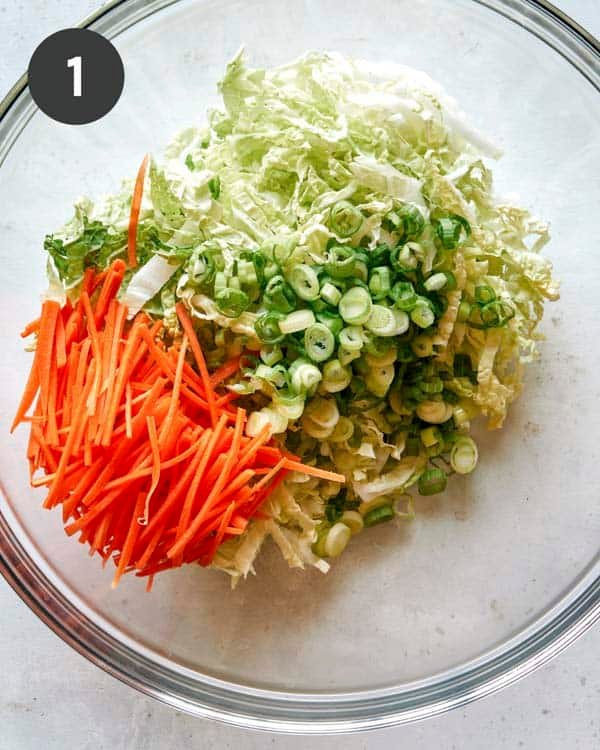
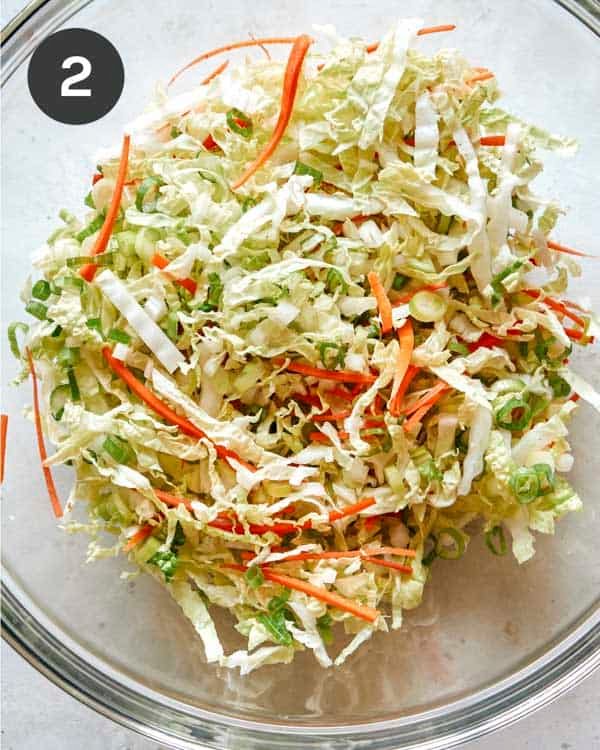
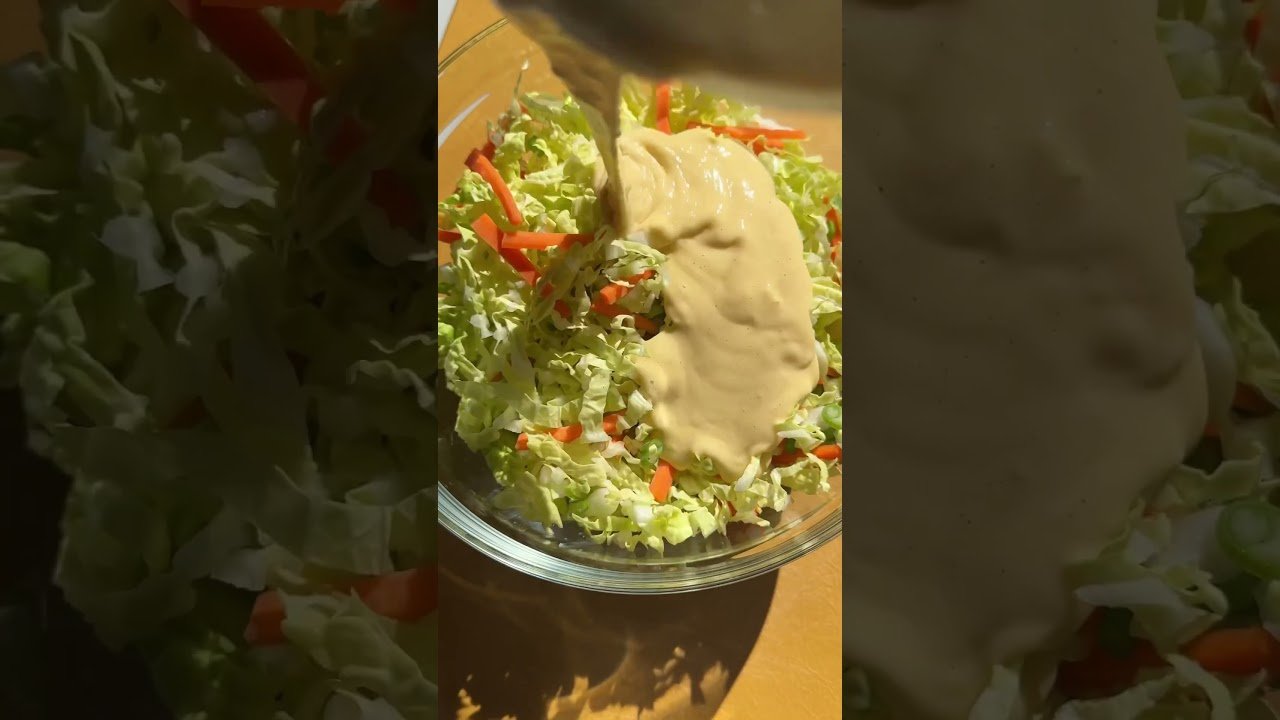
- Combine the cabbage, carrot, and green onions in a large bowl.
- Toss together.
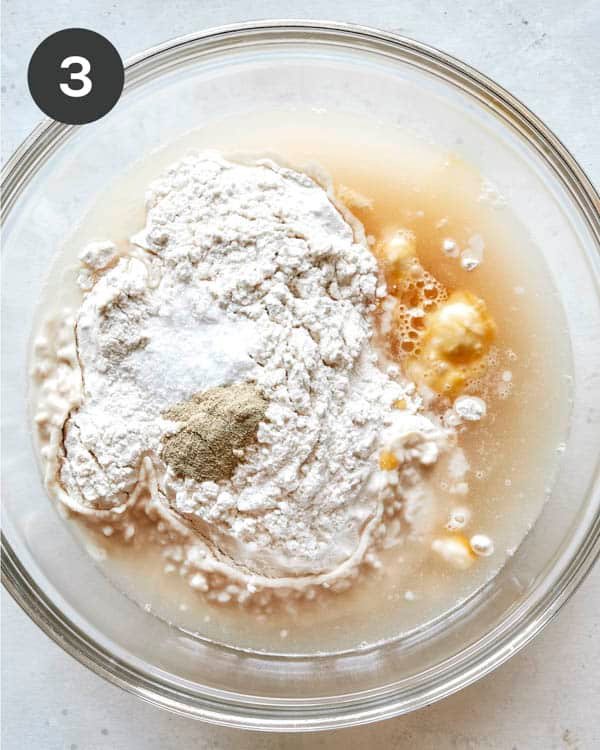
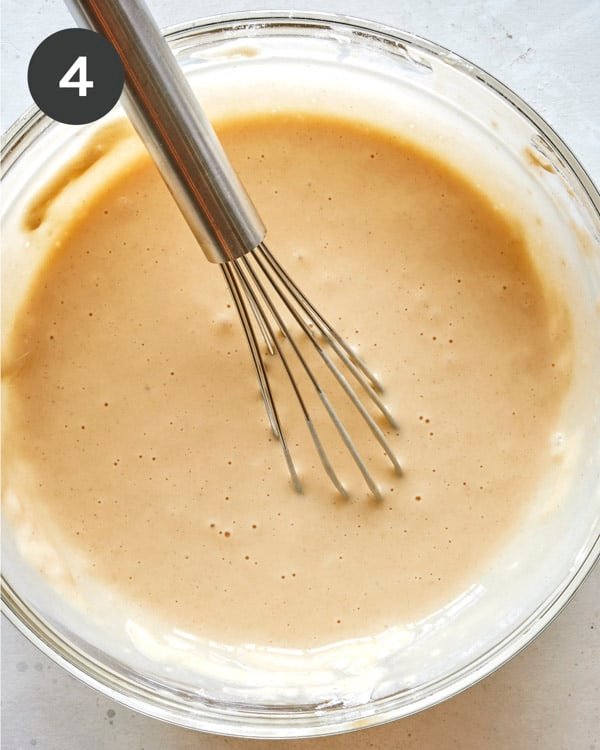
- In another bowl combine the flour, eggs, dashi, salt, and pepper.
- Whisk together.
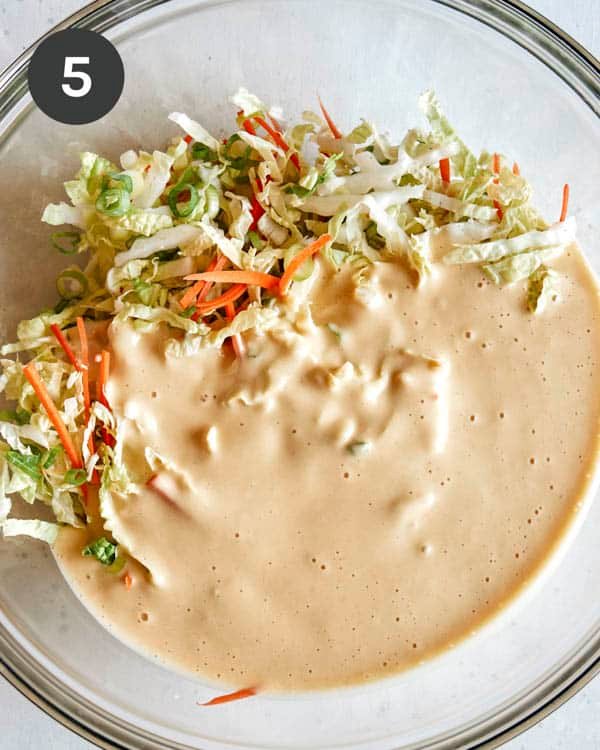
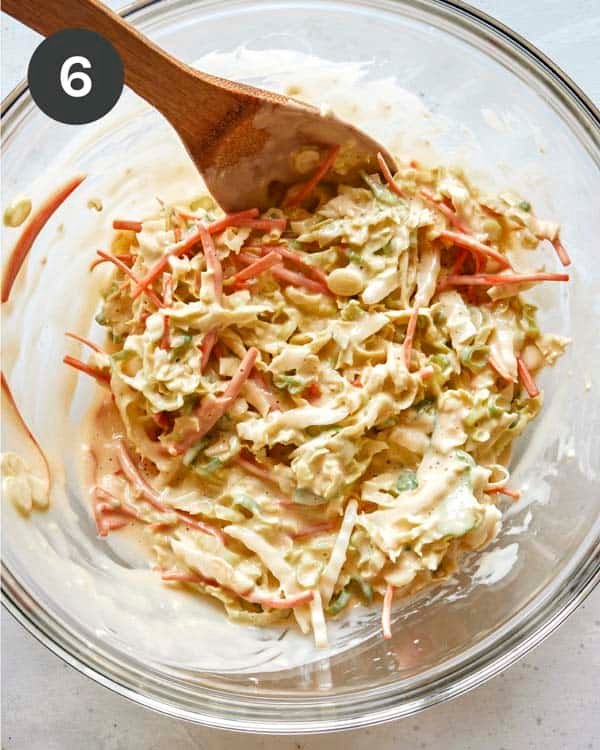
- Pour the egg mixture over cabbage mixture.
- Stir together until vegetables are completely and evenly coated.
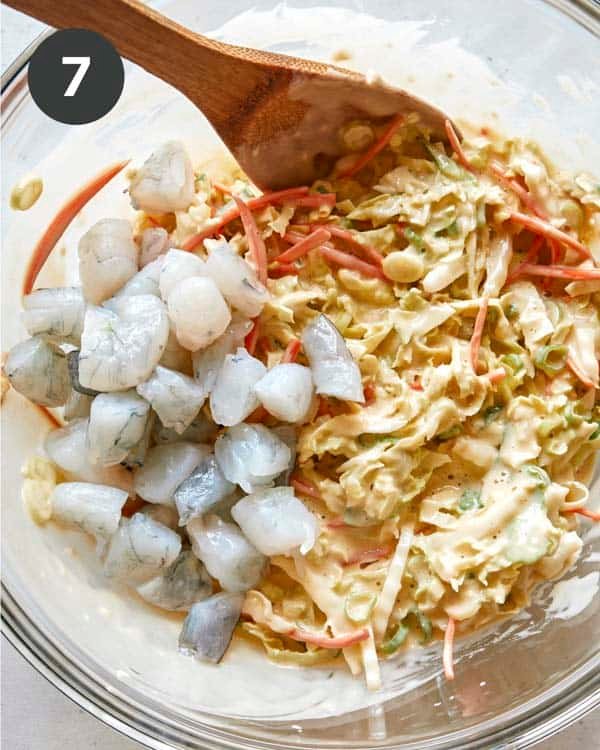
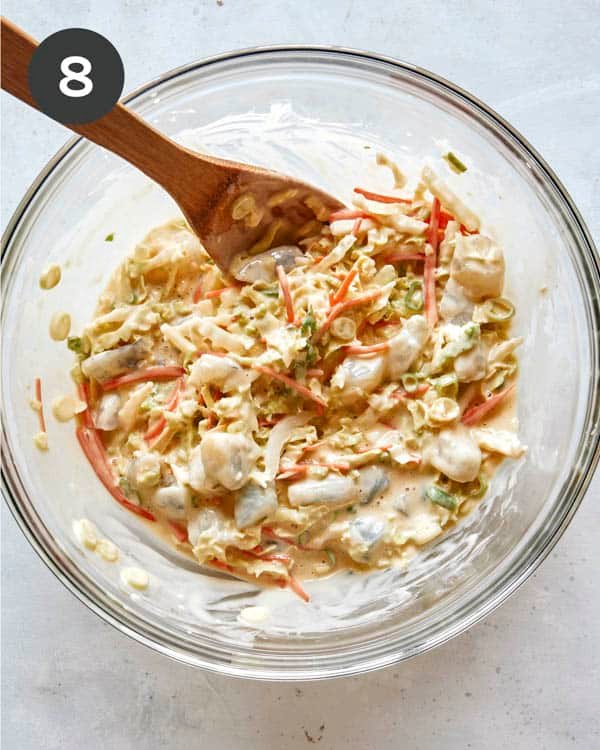
- Add shrimp to batter.
- Fold together.
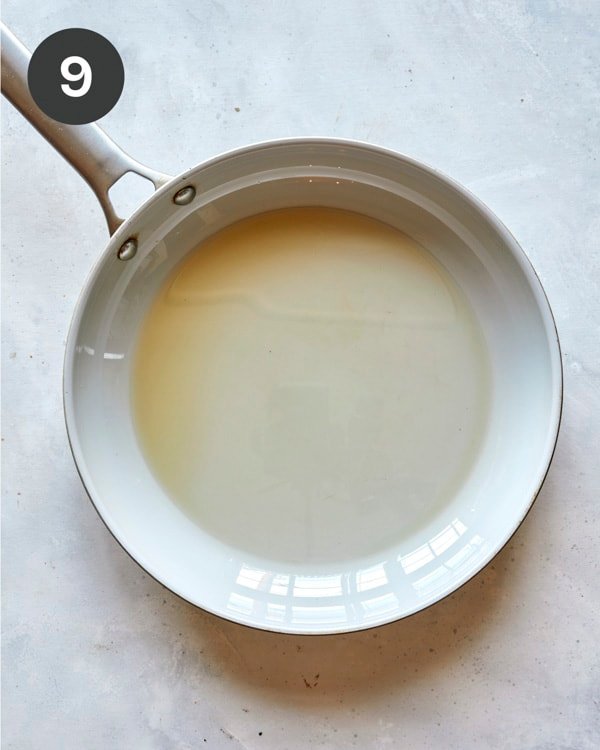
- Heat the oil nonstick sauté pan over medium heat. Swirling pan so entire surface is covered in oil.
- When the oil is hot, pour the entire mixture into pan and cook until pancake is mostly set.
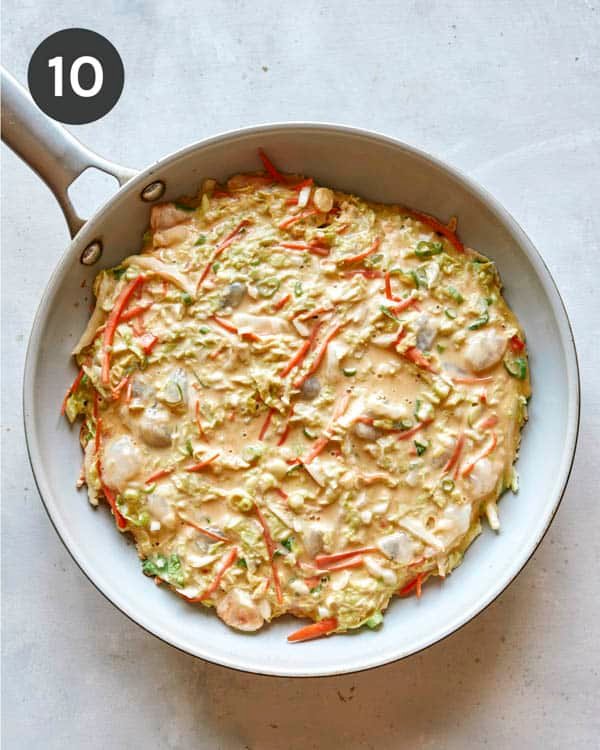
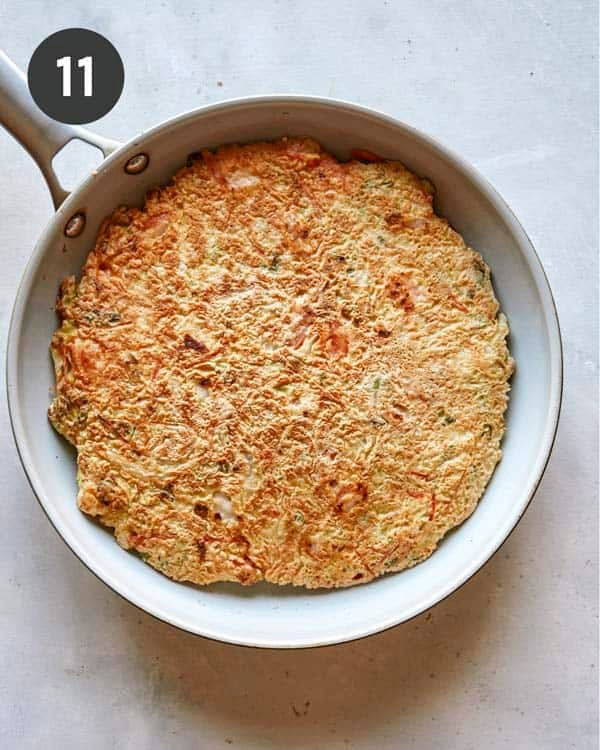
- Carefully flip the pancake and cook until golden brown and fully set.
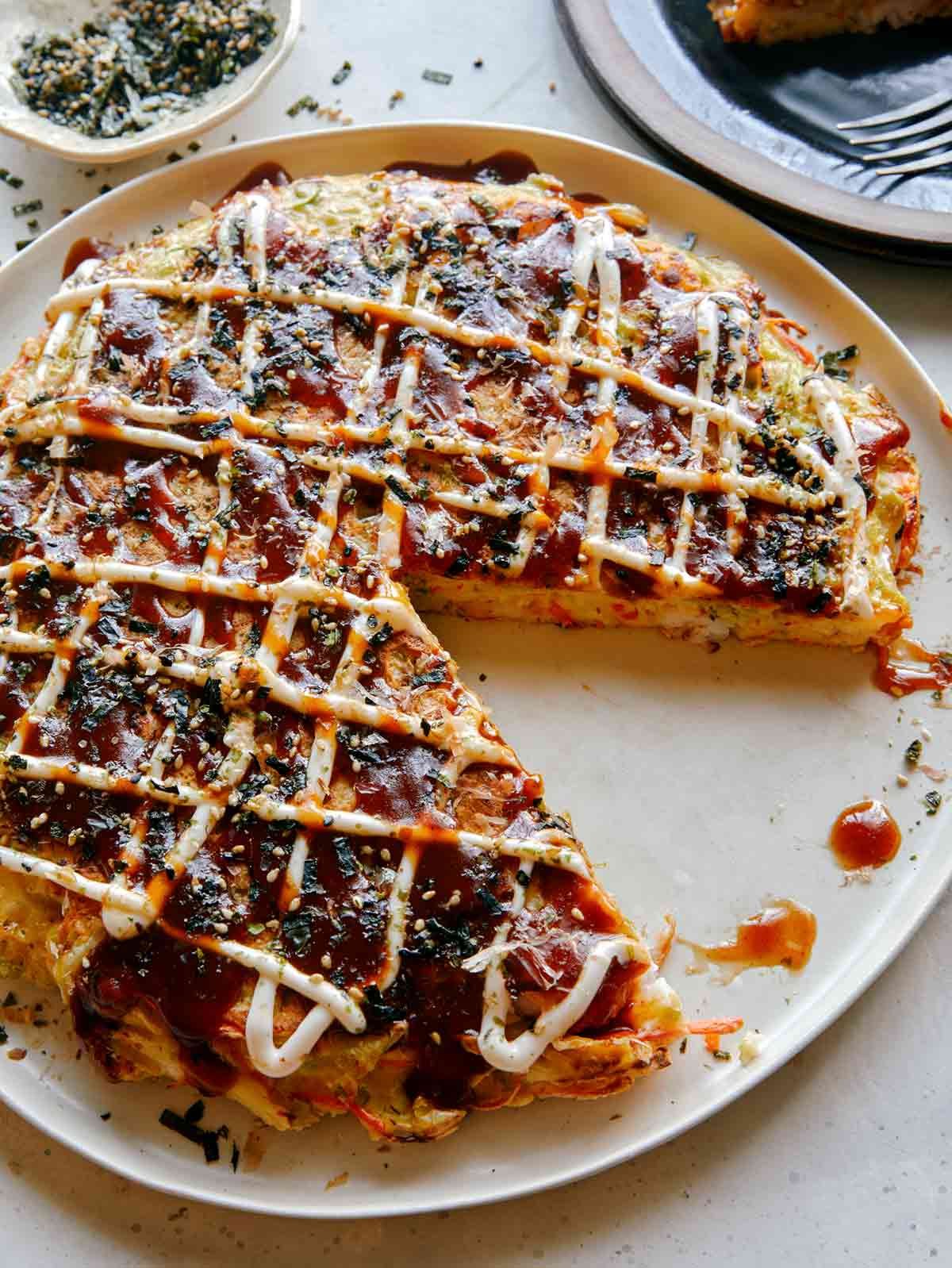
- Transfer the pancake to a large plate and cool for a few minutes. Finish pancake with a drizzle of okonomiyaki sauce and kewpie or mayonnaise and a sprinkle of furikake and bonito flakes, if using. Cut into wedges and serve.

Variations
- Substitute the napa cabbage for savoy cabbage for a more tender filling, or replace it with green cabbage for a heartier bite and crunch.
- Other proteins that work well in Okonomiyaki are: sliced pork belly, oysters, chopped chicken thighs, and sliced squid.
- This dish is also delicious loaded with vegetables. Some other vegetables we like to add are: grated yams (which is traditional), grated zucchini, and some sliced and sautéed mushrooms.
- For an extra crispy exterior, add 2 to 3 tablespoons of cornstarch to the batter.
Tips for Okonomiyaki Success
- Make sure that oil is swirled around the bottom and sides of the pan. It’ll really help prevent the okonomiyaki from sticking when flipping and removing from the pan.
- Once the batter is poured into the pan, try not to touch the dish at all until it’s almost set and ready to flip. This will help the entire dish to hold together in a nice, thick disk.
Make Ahead and Freezing Instructions
Okonomiyaki can be made ahead of time as well as frozen, although freshly made is truly the best. The texture of the vegetables and the wheat/egg batter will be a little softer, but otherwise it will still be delicious. Remember to add the sauce and toppings on only once reheated and ready to serve.
Make Ahead
Our recipe can be made 1 to 3 days in advance (depending on the protein used: 1 to 2 days for seafood and 2 to 3 days for pork, chicken and beef).
Once the Okonomiyaki is made, cool completely. Once cool, tightly wrap in plastic wrap, then place in an airtight container until ready to eat. To reheat, preheat oven to 350˚F. Unwrap and place onto a baking sheet then bake for about 10 minutes or until heated through. Top with toppings, cut into wedges and serve.
Freezing
Our recipe can be frozen for up to 1 month. To freeze, cut Okonomiyaki into wedges. Tightly wrap each wedge in plastic wrap, then place in a freezer safe ziploc bag, removing as much air as possible before sealing. To reheat, preheat oven to 375˚F. Unwrap wedges and place onto a baking sheet (frozen). Bake wedges for 12 to 16 minutes or until heated through. Top with toppings and serve.
More Quick and Easy Recipes You Will Love

Okonomiyaki
A simple and delicious recipe for Shrimp Okonomiyaki, a savory Japanese pancake. Packed with protein and vegetables, this dish can be eaten for breakfast, lunch, dinner, or even a hearty snack!
Prep Time: 10 minutes
Cook Time: 15 minutes
Total Time: 25 minutes
Servings:
INGREDIENTS
INSTRUCTIONS
-
Combine the cabbage, carrot, and green onions in a large bowl and toss together.
-
In another bowl whisk together the flour, eggs, dashi, salt, and pepper.
-
Pour the egg mixture over cabbage mixture and stir together until vegetables are completely and evenly coated.
-
Fold shrimp into batter.
-
Heat the oil in a 10-inch nonstick sauté pan over medium heat. Swirling pan so entire surface is covered in oil.
-
When the oil is hot, pour the entire mixture into pan and cook for 7 to 8 minutes, until the pancake is mostly set.
-
Carefully flip the pancake and cook for 4 to 6 minutes longer, until golden brown and fully set.
-
Transfer the pancake to a large plate and let cool for 5 minutes.
-
Finish pancake with a drizzle of okonomiyaki sauce and kewpie or mayonnaise and a sprinkle of furikake and bonito flakes, if using.
-
Cut into wedges and serve.
NOTES
- Substitute the napa cabbage for savoy cabbage for a more tender filling, or replace it with green cabbage for a heartier bite and crunch.
- Other proteins that work well in Okonomiyaki are: sliced pork belly, oysters, chopped chicken thighs, and sliced squid.
- This dish is also delicious loaded with vegetables. Some other vegetables we like to add are: grated yams (which is traditional), grated zucchini, and some sliced and sautéed mushrooms.
Tips and Tricks for Okonomiyaki Success
- Make sure that oil is swirled around the bottom and sides of the pan. It’ll really help prevent the okonomiyaki from sticking when flipping and removing from the pan.
- Once the batter is poured into the pan, try not to touch the dish at all until it’s almost set and ready to flip. This will help the entire dish to hold together in a nice, thick disk.
Make Ahead and Freezing Instructions
Okonomiyaki can be made ahead of time as well as frozen, although freshly made is truly the best. The texture of the vegetables and the wheat/egg batter will be a little softer, but otherwise it will still be delicious. Remember to add the sauce and toppings on only once reheated and ready to serve.
Make Ahead
Our recipe can be made 1 to 3 days in advance (depending on the protein used: 1 to 2 days for seafood and 2 to 3 days for pork, chicken and beef).
Once the Okonomiyaki is made, cool completely. Once cool, tightly wrap in plastic wrap, then place in an airtight container until ready to eat. To reheat, preheat oven to 350˚F. Unwrap and place onto a baking sheet then bake for about 10 minutes or until heated through. Top with toppings, cut into wedges and serve.
Freezing
Our recipe can be frozen for up to 1 month. To freeze, cut Okonomiyaki into wedges. Tightly wrap each wedge in plastic wrap, then place in a freezer safe ziploc bag, removing as much air as possible before sealing. To reheat, preheat oven to 375˚F. Unwrap wedges and place onto a baking sheet (frozen). Bake wedges for 12 to 16 minutes or until heated through. Top with toppings and serve.
Calories: 258kcal Carbohydrates: 25g Protein: 10g Fat: 13g Saturated Fat: 2g Polyunsaturated Fat: 4g Monounsaturated Fat: 5g Trans Fat: 1g Cholesterol: 116mg Sodium: 742mg Potassium: 199mg Fiber: 1g Sugar: 4g Vitamin A: 1923IU Vitamin C: 7mg Calcium: 65mg Iron: 2mg
CUISINE: Japanese
KEYWORD: savory japanese pancake, savory pancake
COURSE: Breakfast, dinner, lunch, Main Course, Snack