

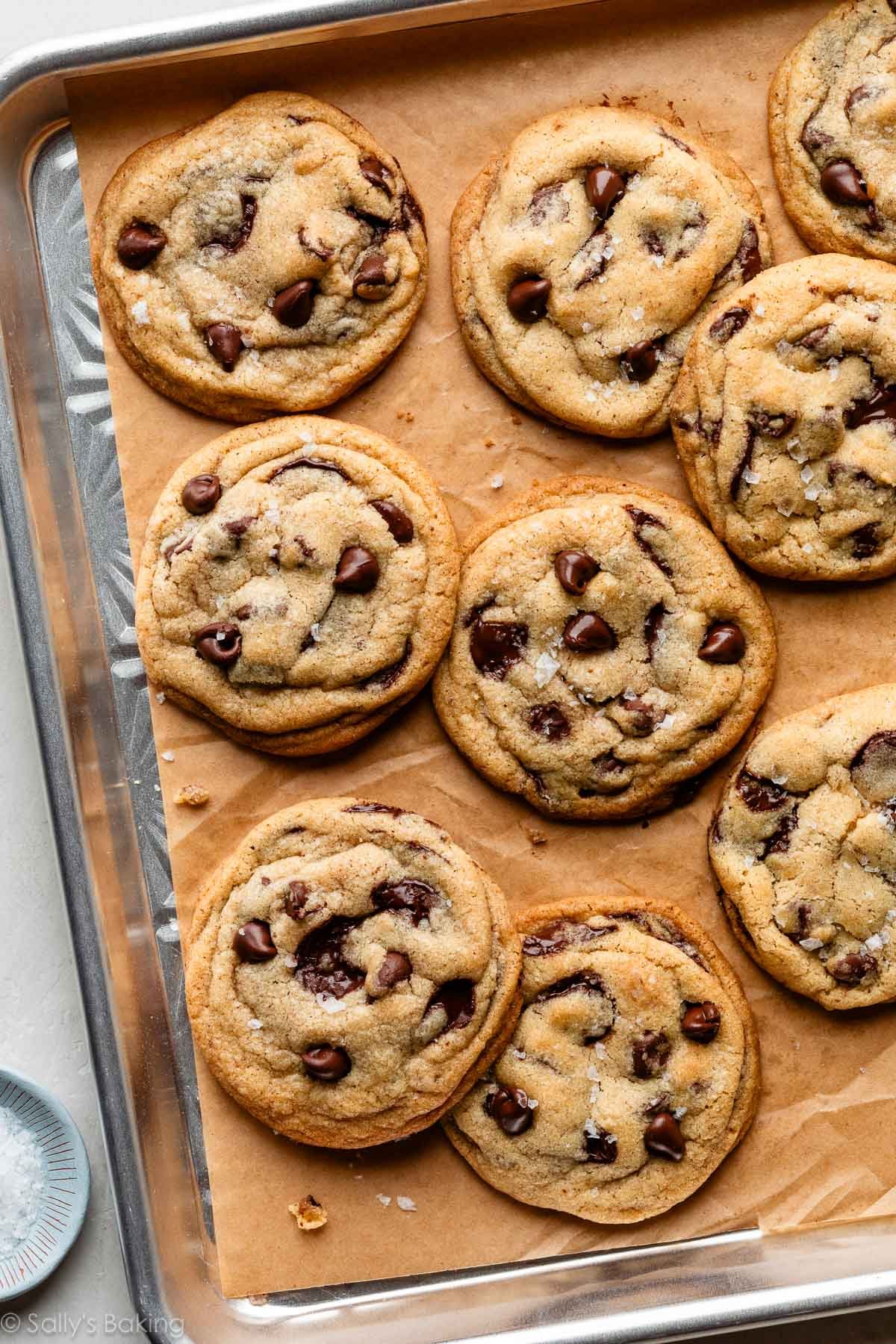

These brown butter chocolate chip cookies take a familiar favorite and elevate it with rich, nutty brown butter flavor. Browning the butter adds deep caramel-like notes that pair perfectly with melty chocolate chips and soft, chewy centers. Note that this recipe requires 2 chill times, but I promise these cookies are worth the wait!

I originally shared this recipe in 2014, and I’ve updated it with new photos, clearer instructions, and more success tips. One small but helpful change: you now shape the cookie dough balls before chilling instead of after, which makes the process easier and helps the cookies bake up thick and evenly shaped.
These brown butter chocolate chip cookies take my fan-favorite chewy chocolate chip cookies and elevate them with rich, nutty depth. Browning the butter transforms the flavor like magic, adding subtle caramel-like, toffee notes that pair perfectly with melty chocolate chips. The result? Thick, chewy cookies with soft centers, golden edges, and irresistible depth in every bite.
One reader, Mackenzie, commented: “These cookies are amazing! Well worth the effort to brown the butter, and they’ve become my go-to cookie recipe. ★★★★★”
Another reader, Amie, commented: “I’ve been looking for that ooey-gooey delicious bakery recipe for years—FOUND IT! If you want a warm, soft chocolatey cookie that has that professional bakery flavor—this is it. This is now my ONLY chocolate chip recipe!!!! ★★★★★”

Why These Brown Butter Chocolate Chip Cookies Work
These aren’t just regular chocolate chip cookies with browned butter swapped in. The entire dough is built to support it. Here’s what makes them stand out:

- Cornstarch: Adding cornstarch helps make the texture extra soft and tender. Use it in my shortbread cookies and brown butter marshmallow crispy cookies, too.
- Milk: Browning butter reduces moisture, so adding a splash of milk brings that balance back without weighing down the dough.
- Sugars: Use more brown sugar than white for a chewier, softer cookie.
- Egg + Egg Yolk: An extra egg yolk equals a richer-tasting cookie.
- Quality Chocolate Chips: I love using Ghirardelli semi-sweet chocolate chips and Callebaut chocolate morsels, or a mix of both. The latter is definitely a splurge, but the flavor and melt are incredible if you’re feeling fancy.
- Flaky Sea Salt: An optional topping, this adds the most incredible salty-sweet flavor combo that works wonders with the toffee-like notes of brown butter!

What Is Brown Butter?
Browning butter simply means melting it and continuing to cook it until the milk solids toast. As it cooks, moisture evaporates, the milk solids sink to the bottom of the pan and turn golden brown, and the butter develops a deep amber color. This small extra step completely transforms the flavor, creating a beautifully complex, nutty richness with subtle caramel-like notes that regular melted butter just doesn’t have. It’s a simple technique with a big payoff. If you’d like a detailed walkthrough, I wrote an entire tutorial on how to brown butter.
Try it in recipes like brown butter apple blondies, brown butter pound cake, brown butter cream cheese frosting, and brown butter pecan pie bars.
How to Brown Butter
The first step in this recipe is, you guessed it, browning the butter.
Cut the butter into uniform pieces and place it in a light-colored pan over medium heat (this helps you monitor the color). Stir as it melts, then continue cooking. The butter will foam as the water evaporates and the milk solids toast on the bottom of the pan.
Watch and listen closely. The butter will turn deep golden amber, smell nutty, and the sizzling will quiet down. Immediately remove from heat and pour into a heatproof bowl. Don’t leave behind all of the browned bits… they’re packed with flavor!

Brown Butter & Moisture Loss
Browning butter can turn a good cookie into a great one, but you can’t simply swap it into any recipe without adjustments.
Why? Moisture loss. During browning, butter loses about 20–35% of its water content. That’s a significant amount, and if you don’t account for it, your cookie dough may be crumbly and/or the cookies may spread too much. Adding extra butter won’t fix the issue either—you’d just be increasing the fat.
The solution is simple: a little milk. Browning butter delivers unbeatable flavor, but the dough needs moisture added back intentionally. In this recipe, 2 Tablespoons of milk restores that balance without weighing the cookies down.
The Butter And Dough Need to Chill
This recipe requires a little planning ahead—there are two chill times, and both matter.
Chill the browned butter: After browning, pour it into a bowl or shallow dish and refrigerate until solid, about 90 minutes. Once firm, cream it with the sugars just as you would softened butter.
This is solidified browned butter:

Here is the creamed browned butter and sugars:

Chill the dough balls: Scoop the dough into 45g (about 2 Tablespoons) portions and refrigerate for at least 2 hours before baking.

Chilling prevents the cookies from spreading into greasy puddles and deepens the flavor as the nutty brown butter settles into the dough. The result? Thick cookies with soft, buttery centers and lightly crisp edges—well worth the wait!!

Once you’ve browned your butter and chilled both it and your dough, these cookies bake into beautifully thick rounds with soft, buttery interiors and edges that crisp ever so slightly.

Make Ahead Tip: This is an excellent freezer-friendly dough. Freeze the shaped cookie dough balls and bake straight from frozen (add 1 extra minute). Fresh brown butter chocolate chip cookies whenever the craving hits? Yes, please. See how to freeze cookie dough.
Description
These brown butter chocolate chip cookies are thick, soft, and chewy with deep caramel-like flavor from toasted butter. The dough includes an extra egg yolk for richness and a touch of milk to replace lost moisture. Plan ahead for two chill times—your patience is rewarded with bakery-style cookies every time.
- Brown the butter: Slice the butter into pieces and place in a light-colored skillet. The light colored helps you determine when the butter begins browning. Melt the butter over medium heat and stir or whisk constantly. Once melted, the butter will begin to foam. Keep stirring/whisking. After 5–7 minutes, the butter will begin browning and you’ll notice lightly browned specks begin to form at the bottom of the pan, which are the milk solids toasting. Cook until it is golden in color. Once browned, remove from heat immediately and pour into a heatproof bowl, including all of the browned bits (flavor!). Let cool for 10 minutes, then place in the refrigerator and chill until solid, about 90 minutes. After about 30 minutes, tightly cover the bowl.
- Remove the solidified brown butter from the refrigerator and spoon it into a large bowl (or the bowl of your stand mixer). Using a handheld mixer or stand mixer fitted with a paddle attachment, beat on high speed for 1–2 minutes until smooth and creamy. It may look slightly grainy at first—keep beating and it will come together. If the butter is too firm to cream, let it sit at room temperature for 5–10 minutes. You can also microwave it for 5–8 seconds to slightly soften it, but do not melt it; it should remain solid, just softened enough to beat smoothly.
- Add the brown sugar and granulated sugar and beat on medium-high speed until lightened in color and combined, about 2 minutes. Add the egg, egg yolk, and vanilla extract and beat until combined. Scrape down the sides and bottom of the bowl as needed.
- In a separate bowl, whisk together the flour, cornstarch, baking soda, and salt. Add the dry ingredients to the butter mixture and mix on low speed until just combined. With the mixer running on low, drizzle in the milk and mix until incorporated. The cookie dough will be thick and soft. Add the chocolate chips and mix until evenly distributed.
- Scoop and roll the dough into balls, about 2 Tablespoons or 45g each. Shape them taller rather than wide—almost like a cylinder. This helps the cookies bake up thicker. Place the dough balls on a lined baking sheet or plate, cover, and refrigerate for at least 2 hours or up to 3 days.
- Preheat oven to 375°F (191°C). Line large baking sheets with parchment paper or silicone baking mats. Set aside. Arrange 8 dough balls per baking sheet, spacing them about 3 inches apart. Sprinkle sea salt, if using, on top of the dough balls.
- Bake for 12–14 minutes, or until the edges are lightly golden brown. The centers will look soft when you remove them from the oven. Cool on the baking sheet for 5 minutes. During this time, you can press a few extra chocolate chips into the tops (just for looks!). The cookies will slightly deflate as they cool. After 5 minutes, transfer to a wire rack to cool completely.
- Store in an airtight container at room temperature for up to 5 days.
Notes
- Make Ahead Instructions: You can make the cookie dough and chill it in the refrigerator for up to 3 days. Baked cookies freeze well for up to 3 months. Thaw at room temperature. Unbaked cookie dough balls freeze well for up to 3 months. Bake frozen cookie dough balls for an extra minute, no need to thaw. Read my tips and tricks on how to freeze cookie dough.
- Special Tools (affiliate links): Light-Colored Skillet or Stainless Steel Skillet | Electric Mixer (Handheld or Stand) | Baking Sheet | Silicone Baking Mat or Parchment Paper | Medium Cookie Scoop | Cooling Rack
- Why Do I Solidify the Browned Butter? Solidifying the browned butter allows you to cream it with the sugars, which creates structure and gives the cookies a thicker texture. Using melted brown butter will produce a thinner, denser, and possibly greasy cookie.
- Extra Egg Yolk: The extra yolk adds richness and chewiness without making the cookies cakey; do not skip.
- Why Add Cornstarch? Cornstarch helps create a softer, thicker cookie by tenderizing the crumb. If needed, you can leave it out.
- Milk: Browning butter reduces moisture, so adding a splash of milk brings that balance back without weighing down the dough. I recommend reduced fat milk, though whole milk and nondairy milks work in a pinch.
- Be sure to check out my top 5 cookie baking success tips AND these are my 10 must-have cookie baking tools.