
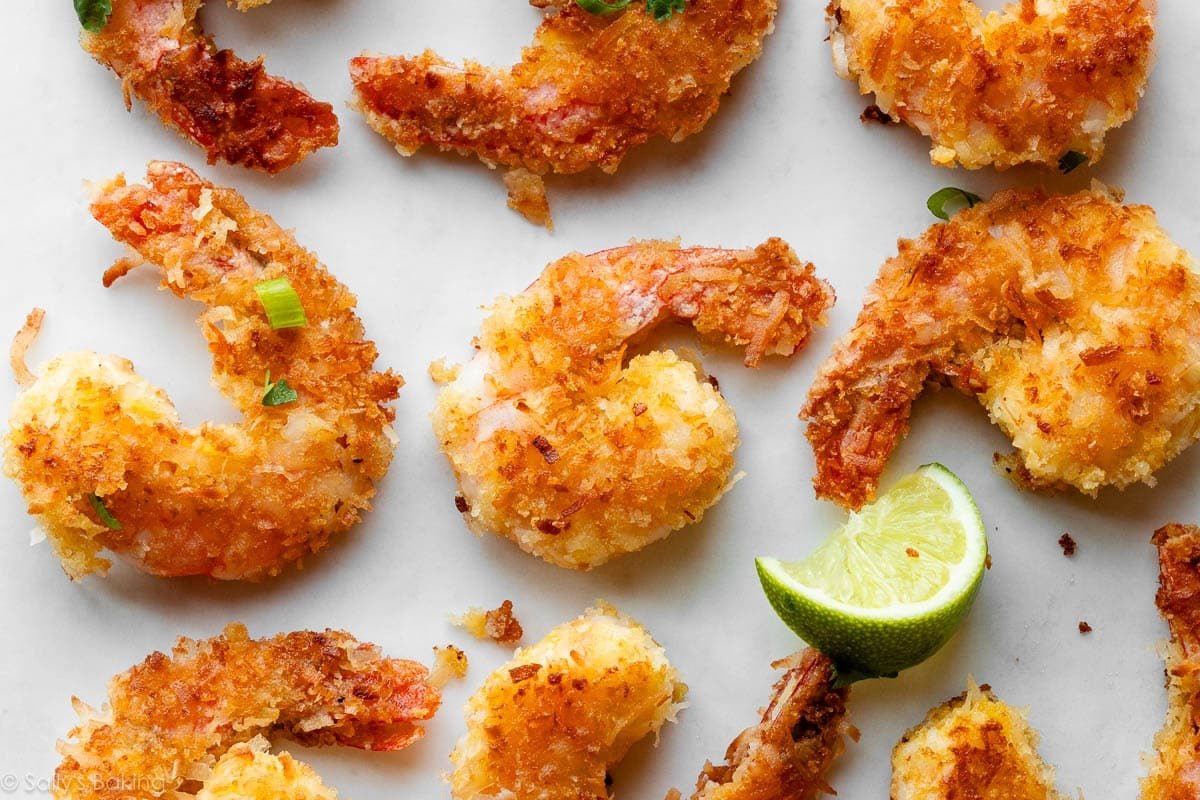
Golden, sweet, and crisp coconut shrimp is a crowd-favorite finger food and it always flies off the serving platter, and especially if you serve it with spicy sweet dipping sauce. The recipe and process are both EASY. Serve this favorite dish as a meal alongside a fresh salad or set out as an appetizer or snack. All will be devoured in no time!

I originally published this recipe in 2014 and have since added new photos and additional success tips.
Crispy, sweet, and surprisingly simple to make, this easy coconut shrimp recipe is one of those restaurant favorites that tastes even better homemade. Each juicy shrimp is coated in a crunchy mixture of sweetened shredded coconut and Panko breadcrumbs, then pan-fried until perfectly golden.
I’ve been making this recipe for years because it’s reliable, beginner-friendly, and comes together in about 30 minutes with simple ingredients.
If you’ve never made homemade coconut shrimp before, don’t worry—I’ll walk you through each step so your coating stays crisp and actually sticks to the shrimp.
One reader, Paul, commented: “I made these tonight for an appetizer for us and they turned out PERFECTLY! Thank you so much for such a great recipe. I cannot wait until we have guests to make these for them. ★★★★★“

This shrimp recipe makes the perfect midweek meal or quick appetizer because the ingredients are simple and there’s minimal cook time.
Why You’ll Love This Easy Coconut Shrimp
If you’re searching for the best coconut shrimp recipe, here’s why this one stands out:
- Extra crispy texture: A combination of Panko breadcrumbs and shredded coconut creates a light, crunchy coating that stays crisp instead of becoming heavy or greasy.
- Perfect sweet-and-savory flavor: Sweet coconut balances the naturally briny shrimp for the classic coconut shrimp flavor everyone loves.
- Quick to prepare: Ready in about 30 minutes.
- Easy enough for beginners: The simple breading process is pretty foolproof, and I’ll explain why each coating layer matters.
- Versatile: Serve as an appetizer with dipping sauce or turn it into dinner with rice, salad, and roasted vegetables.
Best Shrimp to Use
I recommend using large raw shrimp that are peeled, deveined, and have the tails attached. The tails make the shrimp easier to prep, coat, and handle, especially if you’re serving them as an appetizer.
I prefer large shrimp because they shrink as they cook and stay nice and juicy. Medium shrimp will work too, but they’ll be much smaller after frying. (If you have medium shrimp on hand, they’re also wonderful in this honey garlic shrimp recipe.)
For the best coconut shrimp, use:
- Large raw shrimp
- Peeled and deveined
- Tails attached
Frozen raw shrimp work just fine as well. Just thaw them completely and pat them dry before breading. Dry shrimp hold onto the coating much better than wet shrimp.

Other Ingredients You Need
You only need a handful of simple ingredients:
- Sweetened shredded coconut: Creates the signature flavor and caramelized crunch. Unsweetened coconut works too, but the coating won’t become quite as crisp or beautifully golden.
- Panko breadcrumbs: Much crispier than traditional breadcrumbs.
- Eggs + flour: Essential for helping every bit of coconut stay attached.
- Oil for frying: Coconut oil adds subtle flavor, though vegetable or avocado oil work just as well.

What Makes This Coconut Shrimp So Crispy?
The secret is the coating. Instead of using only coconut, each shrimp gets 3 layers of coating:
- A light coating of seasoned flour
- Beaten eggs
- A generous mixture of sweetened shredded coconut and Panko breadcrumbs
Each layer has a purpose. The flour helps the egg stick, the egg helps the coconut coating stick, and the Panko creates an extra crispy crust while the coconut caramelizes into beautifully golden, crunchy bites.
Don’t skimp on pressing the coconut mixture onto each shrimp because you want plenty of coating on every piece.

Success Tips for Cooking Coconut Shrimp
You need enough oil to cover the bottom of your skillet, and tongs are helpful for flipping.
Pat the shrimp dry before coating. Press the coconut mixture firmly onto every shrimp. Fry in batches so the pan doesn’t become crowded.
Keep the oil at medium heat: too hot and the coconut burns before the shrimp cook; too cool and the coating absorbs excess oil.
Transfer cooked shrimp to a paper towel–lined plate while cooking the remaining batches.

Yes, but make sure it is raw. This is what I usually use when I can’t get my hands on fresh shrimp. Thaw frozen raw shrimp completely and pat dry before coating. I don’t recommend using frozen cooked shrimp.
Be sure to pat the shrimp dry before coating. The three-step coating process is important. Flour helps the egg stick, and the egg helps the coconut adhere. Press the coating firmly onto the shrimp before frying.
You can bread the shrimp a few hours ahead and refrigerate them until ready to fry. Fried leftovers reheat well in the oven or air fryer.
Yes. Freeze cooked shrimp for up to 2 months. Reheat from frozen in a 350°F oven until hot and crispy.
You can, but the results won’t be as good. The sugar on the sweetened coconut shreds melts and the coating becomes crisp and slightly caramelized. It’s incredible. If you prefer unsweetened shredded coconut, you can absolutely use that but you’ll lose the sweetness and some crisp.
Panko breadcrumbs stay crispier than regular breadcrumbs because they do not absorb as much grease and liquid during the frying process.
Coconut Shrimp Dipping Sauce
You can serve coconut shrimp plain, but it tastes even better with a dipping sauce. (It’s just like serving zucchini fritters with the accompanying Greek yogurt dip.) I especially love these coconut shrimp with an easy 2-ingredient orange chili sauce, which is made with store-bought Thai chili sauce and orange preserves. It’s sweet with a little spicy kick.
Once you see how easy homemade coconut shrimp is, you may never order it at a restaurant again. The crunchy coconut coating, juicy shrimp, and sweet-and-spicy dipping sauce make every bite irresistible.
Try my coconut chicken recipe next!

Description
Golden, crispy coconut shrimp made with sweetened coconut, Panko breadcrumbs, and juicy shrimp. Coat raw shrimp in a flour mixture, then dunk into beaten eggs, then cover in your coconut breadcrumbs topping before frying. Ready in about 30 minutes and perfect as an appetizer, snack, or easy dinner with a sweet-and-spicy dipping sauce.
Optional Dipping Sauce & Serving Garnish
- Start with 3 medium bowls. Combine flour, salt, and pepper in one. Beat the eggs in the second bowl. Combine Panko and coconut in the third bowl.
- Coat each shrimp in the flour mixture, then the eggs, and finally the coconut mixture, pressing gently so the coating adheres. You want plenty of coconut on each shrimp. Place the coated shrimp on a plate or baking sheet while you coat the remaining shrimp.
- Add enough oil to cover the bottom of a large skillet over medium heat. Fry the coconut shrimp in batches, such as 7–8 shrimp at a time, and do not crowd them in the pan. Flip after 2 minutes and fry the other side for 2 minutes or until golden brown. If you prefer the shrimp a little darker, fry each side for about 2:30–3 minutes. Place the finished coconut shrimp on a paper towel–lined plate and continue cooking the remaining batches.
- Mix Thai chili sauce and preserves together and serve alongside the shrimp. Garnish with chopped scallions, cilantro, and/or lime wedges, if desired.
- Store leftover shrimp tightly covered in the refrigerator for up to 3 days.
Notes
- Freezing Instructions: Fried coconut shrimp freezes well, up to 2 months. Reheat for 10 minutes in a 350°F (177°C) oven or until thawed and warm.
- Special Tools (affiliate links): Glass Mixing Bowls | Large Skillet | Tongs
- Shrimp: Large raw shrimp that are peeled, deveined, and have the tails attached are best for this recipe. The tails make the shrimp easier to prep, coat, and handle, especially if serving as an appetizer. If using frozen shrimp, thaw completely and pat dry before beginning. Feel free to remove the tails before starting if desired.
- Can I Use Cooked, Frozen Shrimp? I don’t recommend it. For the best texture and flavor, start with raw shrimp. If using frozen raw shrimp, thaw completely and pat dry before coating.
- Oil: I prefer frying the coconut shrimp in coconut oil for the best taste. You need enough to coat the bottom of your skillet, usually about 3 or 4 Tablespoons.
- Air-Fry or Oven Bake: Many readers have swapped the traditional stove-top frying method for baking or air-frying instead. I have not personally tried them in an air-fryer. You’ll lose a lot of crispiness baking them in the oven, but feel free to try it in a 400°F (204°C) oven. Spread out onto a lined baking sheet, bake for 10 minutes, then flip each and bake for another 7–8 minutes.
- Serving Sauce: We especially love serving coconut shrimp with the simple orange chili sauce included in the recipe, but this dipping sauce is another similar option!